The art of transitions
Over the past weeks, I’ve been thinking about the art of transitioning back to stability after an intense phase of life, and about what is needed to make it a smooth passage, or at least, what we can do so that coming back to our normal life doesn’t feel like a violent crash where we don’t know who we are or what to do with the pieces of us that have changed. Almost as if managing transitions in a steady way was a skill nobody ever taught us, but an essential skill to possess. Like a smooth landing after a long flight, instead of a sudden, hard flat landing that gets your heart to race and your mind to thing: is this it? A slap in the face or a hand that holds you as you step on a slippery area: this is what a well held transition phase can provide.
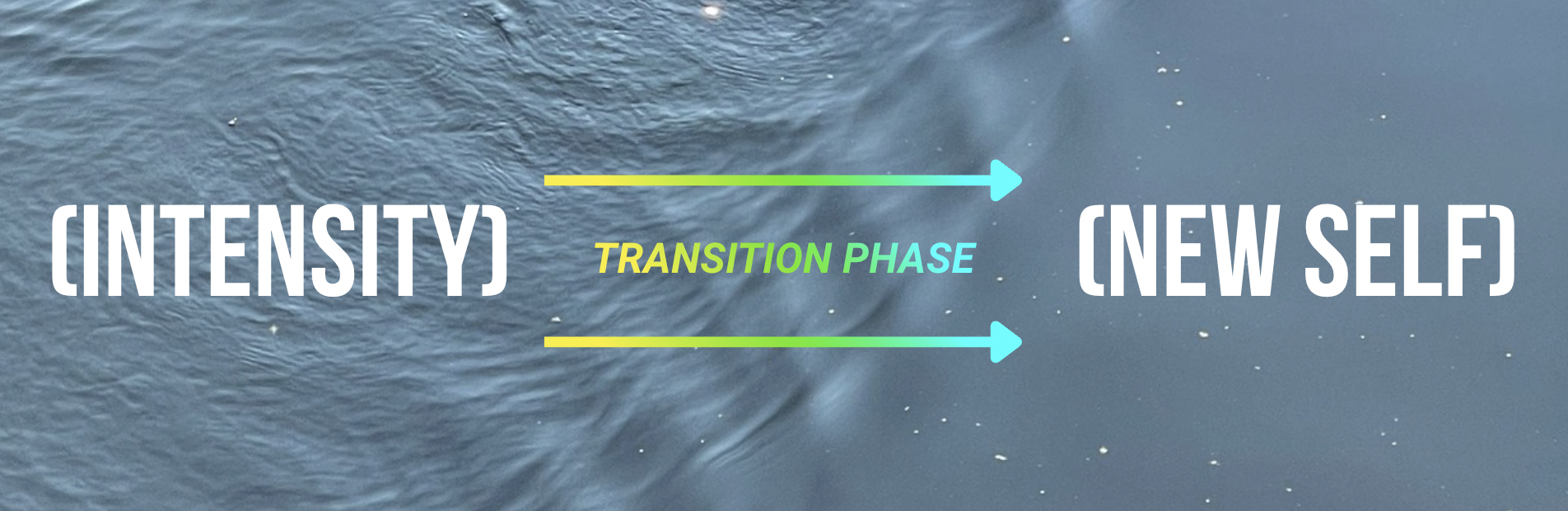
What is a transition, when do they happen?
In between an intense experience and back to daily life, we land in a grey zone where we need to signal ourselves that one mode is over, and that another one must take over: this can happen during trips, holidays, big training weeks, grief, heartbreak, when we get a new job, move to a new city, after an important fight, after making big decisions or when big decisions are being made for us. All of these ask for a period where we feel different, changed, but we haven’t had the possibility to integrate those new pieces of ourselves into our every day life. Some things when they die leave kind of a blank in us that doesn’t have a replacement yet - or maybe won’t get one. Some things when they appear to us leave an extra bit that doesn’t have a space yet in us, or need rearranging to be done to have it be processed.
I kind of think of humans as sensing, feeling creatures, that organise their sense of self around specific events, emotions, people and habits. Whenever we encounter intensity, it changes us and it changes where our ‘center’ is - our ‘heart’, if you will.
Letting go of the old, giving way to the new
We get tipped off balance when facing intensity, in a good wonderful way, or in a slap in your face, kick you to the floor and watch you cry kind of way. Maybe both at the same time. Sometimes, often, we are asked to close chapters of our lives in those intense moments, or to open new ones we do not know what will open on (two faces of the same coin?). To let go of some old identities, habits, even if for just a time, we get to experience a new side of ourselves, one that was not a part of our daily landscape until now.
Often we get stuck into the intensity: strong energy (the feeling of being high and burning intensely), exhaustion, lingering sadness, pain, bitterness. We get stuck with the sensation that something moved inside us, and we are not sure exactly how to rearrange our sense of self around this newly positioned heart, brain or daily routine. We repeat the same thoughts, reactions, even though something has changed.
My take is a bit dramatic, maybe, but I believe in it quite fondly: it is not really possible to just go back to normal after an intense experience, even if it doesn’t imply the rupture of important structures in your life. It could just be a festival you went to, that shook you to your bones and showed you something that you didn’t know possible of yourself, or others. Maybe then, your task is not to go back to normal and pretend the intensity didn’t happen, because with intensity comes change, in subtle ways or in never again ways. And your job is to hold the barre while you figure out how to integrate this new axial point in you. That means addressing and making space for the fear, the energy, the joy, the pain, the grief, and taking all of it with you, without gripping onto it.
What can we do in these periods of life?
Transitions are awkward, and they are messy. We become children like again, unknowing and raw, like the human specie when confronted to its own unpredictable life.
I find that these are the moments music can play such a big role for me to signify a turning of a page. Haircuts, of course, but also anything that helps find a new way of being to the world. And coming back to what fed your life before, and that might still: rituals, routines, habits that still make sense or that can make a new one. A practice that you do even more regularly, a thing that you can learn, skill, language, something to hold you and structure you outside as you are figuring out your structure inside.
You can give yourself a lot of grace into the process of figuring it out. I usually find that making things, writing, dancing help me to make sense of things that feel raw and messy, as well as connecting to friends that know me well and can bring me back to a feeling of being held and rooted.
If you are a sensitive and perceptive person, transitions might impact you more strongly than others, and it is perfect this way.
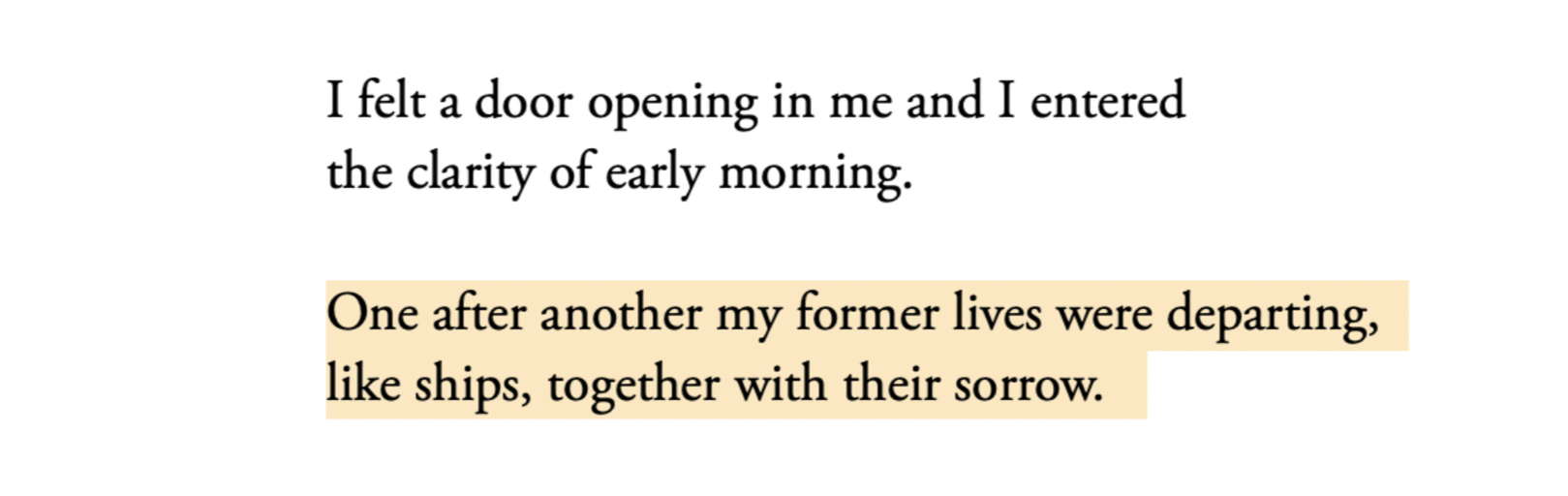
Czeslaw Milosz
The body that holds on, the body that lets go
In the grey zone of transitional phases, a part of you might remain stuck into the emotions of what came before, and you might rehash those emotions, events, thoughts, because they feel uncompleted. Your body is literally holding on to the past, because it is what your mind knows and feels is safe. And when you give space to the overwhelm and stuck emotions, you can start to work through the feelings that woke up in the intensity and allow them to be felt to make space for the new version of you, the new habits, the new ideas that haven’t emerged yet. A frozen body holds on, a moving body lets go. Let yourself move, in your space, in your body, in any practice you can. I was once in a 5 rhythm class, dancing on the same spot for half an hour, when the teacher (amazing Patty Petropoulou) told us something along the lines of: « Move! You have to move through space, don’t stay stuck on the same spot! If you don’t move, you don’t change! Explore and move around! ». That is a transition well executed. Feeling and moving, allowing new things to be birthed and letting go of what has died.
In transitional times, to make it through to the other side and the newly organised you, invite mess, invite change. You have no choice anyway, and the least you resist to be changed, the smoother you’ll land.
RESOURCES USED:
and this article, that talks about the grey zone of transitions, that I come back to reading every so often.
and this one, another gem I return to often about habits and times of change